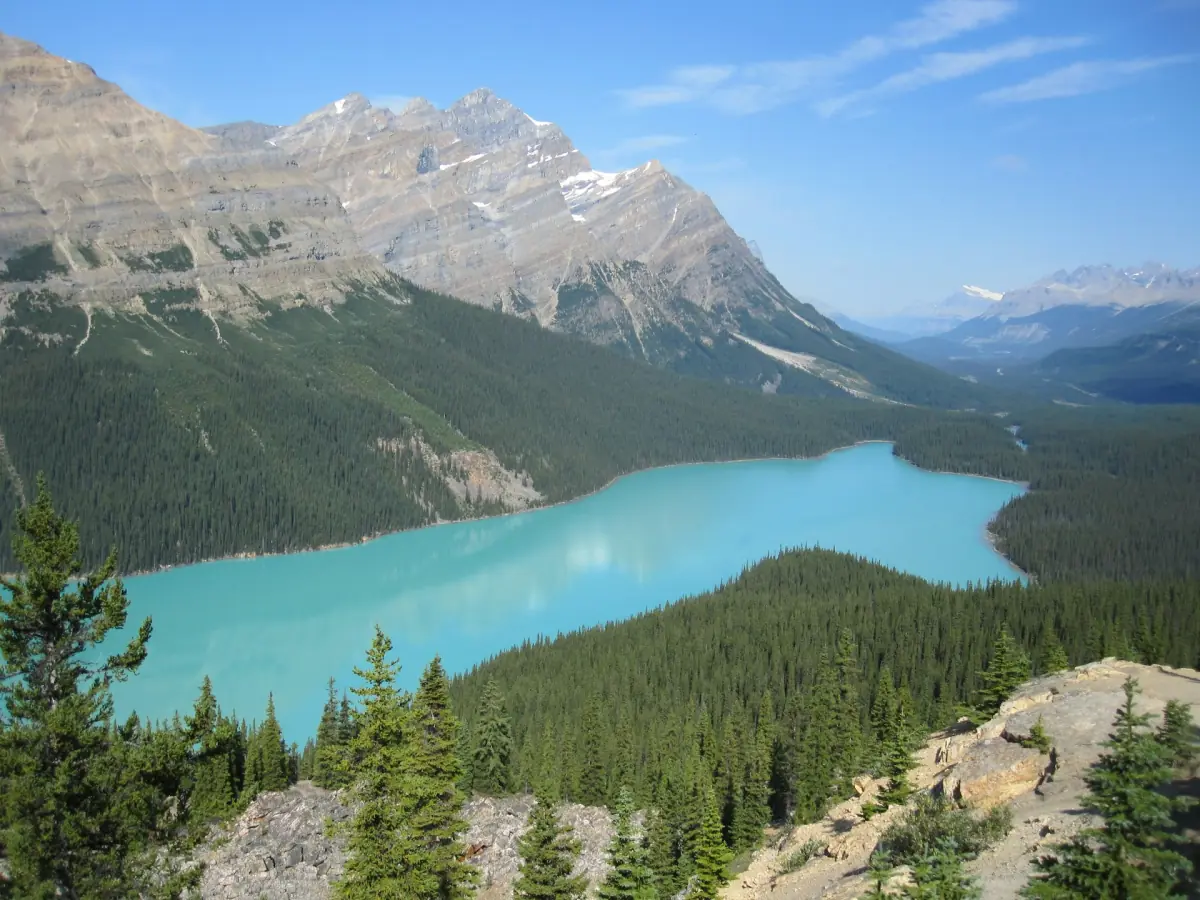
Best time to visit Peyto Lake
The best time to visit Peyto Lake depends on your priorities. July and August are plausible choices for a visit with less snow, based on regional snow information. The lake's blue or turquoise appearance comes from fine rock particles carried into the water, but its appearance and visibility change with conditions. Choose a season for the kind of journey you can prepare for, rather than a promised colour on a particular day.
Outside the main summer period, snow, ice, shorter daylight and changing road conditions deserve more attention. The lookout and the longer Bow Summit route are different outings, so check their individual conditions. A Parks Canada report dated 25 October 2026 described ice and fresh snow at the lookout, and snow with icy sections at Bow Summit. Check a current report before setting out rather than treating that earlier observation as today's conditions.

Seasonal excursion routes
A guided excursion can combine a lake visit with other stops. The seasonal route shown here focuses on waterfalls in summer and Abraham Lake in winter. Check the itinerary and the available departure for your chosen date: the seasons do not follow an identical route, and an ice bubble sighting is not guaranteed. The included vehicle, water and multilingual guide help you compare the option with your own road plans.
Check the selected pickup location and time in the booking details. If waterfalls are a priority, our waterfall excursion guide explains the seasonal distinction. For a wider choice of lake trips, see Peyto Lake tours.
A seasonal outing
This outing changes its route with the season, so check the stops for your date.
Hand-picked tours, booked through GetYourGuide. Prices are indicative starting prices in US dollars (as of October 2026). Tap a tour for live availability and the current price in your currency.

A seasonal Parkway excursion
Compare a route with summer waterfall stops and a winter Abraham Lake itinerary; check your date and pickup details.
Peyto Lake weather and regional climate
Weather can change quickly in the mountains. Regional Parkway information describes winter weather from early November to mid June, lakes usually thawing by the end of June and alpine trails usually becoming snow free from mid July. These are broad regional patterns, not fixed dates for Peyto Lake. Check the forecast and current trail report close to departure, and carry layers suitable for a change in conditions.
Historical climate normals from the Lake Louise station offer context, not a forecast for Peyto Lake or a measurement at Bow Summit. The station is at 1,524 m and the reference period is 1981 to 2010. For example, its average daily high and low were 20.4°C and 4.7°C in July, and minus 5.4°C and minus 18.4°C in January. These older regional figures do not describe the weather on a specific visit.
Precipitation in the historical data includes rain and snow expressed as water equivalent. It should not be read as rainfall alone. Conditions at the lake and along the route may differ from the station. Rather than packing for an average temperature, use the current forecast to choose clothing, footwear and an alternative plan.
Summer, autumn and spring
Summer is useful for visitors who want to combine the lookout with other Parkway stops while aiming for less snow. Parking at Peyto and Bow Lake is limited and can fill early in summer, so allow flexibility and follow signs when you arrive. A viewpoint stop and a longer walk need different amounts of preparation; our walking guide separates the lookout, Bow Summit and the rough descent toward the shore.
In spring, regional thawing patterns do not provide a reliable date for the lake on your itinerary. Snow may linger on trails even when the road is passable. Autumn can bring a return to icy surfaces, as the dated 2026 trail report illustrates. For either season, check recent conditions and bring footwear appropriate to the report. Avoid planning around a guaranteed thaw, frozen surface or exact colour.
Winter daylight and road conditions
A winter visit needs a road plan as well as warm layers. Snow clearing and winter maintenance are scheduled from 7:00 to 15:30, and Parks Canada recommends travelling in daylight. The road can be temporarily affected by weather or avalanche control. Check 511 Alberta before departure and carry food, water, warm clothing and offline information. See the winter road guide for the tire or mounted chain rule and further preparation.
Smoke and visibility
Smoke can affect travel conditions and mountain views. Before leaving, check the available smoke forecasts, air quality information and road reports alongside the weather forecast. Visibility and lake colour vary, so leave room to adjust your stop if conditions change.
Frequently asked questions
When is the best time to visit Peyto Lake for less snow?
July and August are reasonable starting points based on regional snow patterns. Check the current trail report, since conditions and visibility vary.
When does Peyto Lake thaw?
Regional information says lakes usually thaw by the end of June. That is not a fixed date for Peyto Lake, so check current conditions for your trip.
Are the Lake Louise climate averages a Peyto forecast?
No. They are historical regional normals for 1981 to 2010 at the Lake Louise station. Use a current forecast for the day you travel.
Can I visit in winter?
Winter travel is possible when conditions permit, but prepare for snow and ice, check 511 Alberta and plan to drive in daylight. Temporary restrictions can occur.